
How Arrest Warrants Work in Mason County
An arrest warrant tells a peace officer to arrest a named person. It grows out of an accusation rather than a missed court date, and it names the offense a judge found reasonable cause to believe occurred. In Mason County, the case belongs to the court that issued the order, and that court keeps the file the public may inspect. The 79th District Court handles most matters before a felony moves up, from misdemeanors punishable by up to a year to felony preliminary examinations. The 51st Circuit Court picks up felony cases after bindover and runs the family division, which includes support enforcement. So a felony question can start in one courtroom and end in the other. The charge decides where it lands. Note: An arrest warrant is not the same as a search warrant, and the two are stored and disclosed under different rules.
Before Michigan Issues an Arrest Warrant
Michigan law fixes the front end of the process. Under MCL 764.1a, a magistrate decides whether to issue a warrant or a summons after a sworn complaint and a finding of reasonable cause, and the supporting facts can arrive through the complaint, sworn testimony, or an affidavit. The statute lists settings that favor a summons, plus exceptions where a warrant may issue, such as an assaultive offense, a domestic-violence allegation, or signs a person will not appear. A separate path covers an arrest made without a warrant. MCL 764.1c sets out the probable-cause step that follows, where a magistrate reviews the case and endorses or issues process. Neither statute creates a public list for Mason County, and neither turns a complaint into an automatic warrant.
- A sworn complaint comes first, and the court weighs the facts in it.
- A summons is common, and an arrest warrant is not automatic.
- A warrantless arrest follows a different review path after custody begins.
Key Rules: MCL 764.1a covers the complaint and probable-cause decision, MCL 764.1c covers a warrantless arrest, and MCL 780.651(8) keeps a search-warrant affidavit out of public view.
Arrest Warrants: What They Contain
A warrant is a short document with one narrow job. Michigan court rules describe a warrant that names the person, states the offense, and directs a peace officer to bring that person before the court. The case file behind it holds the rest of the story for Mason County readers.
| Person named | The name as the complaint gives it, which may differ from a nickname or a former name. |
|---|---|
| Offense | The charge the court found reasonable cause to support. |
| Issuing court | The 79th District Court or the 51st Circuit Court, depending on where the case sits. |
| Case or file number | The court's key to the file, illustrated in the general form 20XX-XXXXXX because formats vary by court. |
| Direction to serve | The instruction that authorizes a peace officer to take the person into custody. |
| Release note | Any condition the order carries. Bond terms usually come later, at arraignment. |
The public case search shows the register of actions, not the warrant document itself. In Mason County, the clerk remains the way to confirm one.
Mason County Arrest Cases From District to Circuit
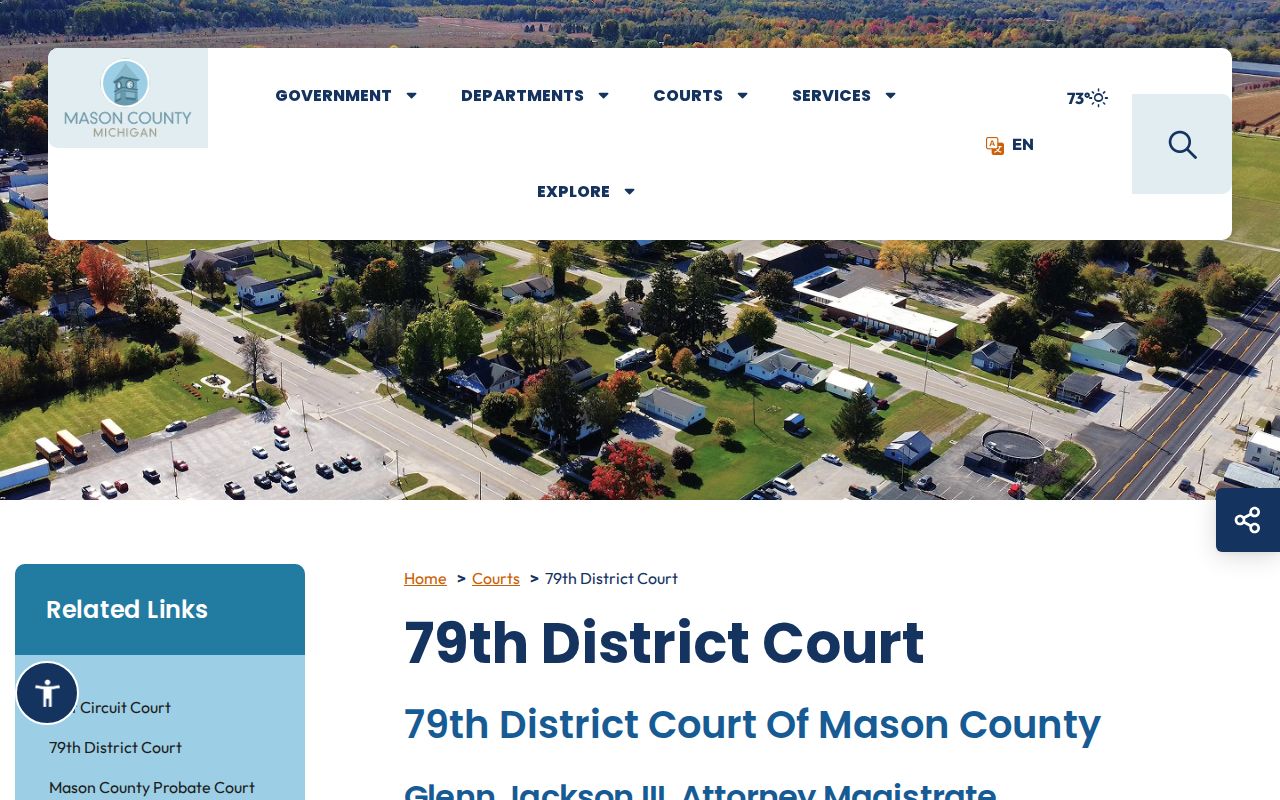
A felony matter in Mason County can have two homes. It starts in the 79th District Court for the preliminary examination, where a judge weighs whether the case moves forward. If it is bound over, the file continues in the 51st Circuit Court. The prosecutor reviews the law-enforcement report along the way and makes the charging decision, which is why the prosecutor's name can show up in the history without that office holding a public warrant list. Each court keeps its own records office and phone line, so asking the right one saves a trip. The 79th District Court page lists the court's jurisdiction, contact details, and search instructions.
The circuit records office serves the higher court, and the two offices answer at different numbers on the same courthouse campus in Mason County. Note: The 51st Circuit Records Office can be reached at 231-845-1445 and court administration at 231-845-0516.
How Warrants Get Served in Mason County
The Mason County Sheriff handles process service, and road patrol deputies work the county around the clock. Service can happen almost anywhere. A traffic stop, a knock at the door, or a stay in custody on another matter can all end with a warrant being served. There is no separate warrant division page and no public service-status lookup. For a question about service or custody, the general line is the contact.
Mason County Sheriff
302 N. Delia St.
Ludington, MI 49431
231-843-3475
Administration hours run Monday through Friday, 8:00 a.m. to 4:00 p.m., while the jail operates every day of the year. A Mason County deputy can confirm custody. Only the issuing court recalls an order.
Mason County Arrest Warrants: Sheriff and Clerk Roles
Three offices touch a Mason County arrest warrant. Each answers a different question, so knowing which one to call saves time.
- The prosecuting attorney reviews reports and makes charging decisions, and that office answers at 231-845-7377. It is not a public warrant search.
- The clerk of the court that issued the order keeps the file and confirms whether the warrant is still open.
- The sheriff serves the order, holds people in custody, and answers law-enforcement questions at 231-843-3475.
A records request is not a recall. A FOIA request to the Mason County sheriff reaches county agency records, while the court file follows the court rules, and neither one cancels a warrant.
Arrest Warrants, Summonses, and Bench Warrants
Three court orders look similar on paper and behave differently in practice.
| Order | What starts it | Where it usually leads |
|---|---|---|
| Arrest warrant | A sworn complaint and a reasonable-cause finding | Custody, then arraignment, counsel, and a release decision |
| Summons | The same complaint process, with an order to appear instead of an order to arrest | A scheduled court date and no custody unless the person fails to appear |
| Bench warrant | A missed court date or another unmet obligation in an open case | A show-cause hearing, a voluntary appearance, or a recall |
The difference matters at the counter, since the office that issued the order also controls what happens next in Mason County. The bench warrant lookup page covers the missed-date side of that split.
No Public Mason County Arrest Warrant Roster
Mason County publishes no arrest-warrant roster, and the sheriff's site offers no name search. Court pages point readers to the public case index instead, where a warrant appears as an event inside a case rather than as a listing with a photograph or charge summary. That is the honest shape of the record here, and it is why a blank search means little. The jail information page describes visits, mail, and the lobby kiosk for inmate funds.
Mason County's jail page stays silent on the details people often need most. No bond schedule is posted there. There is no warrant counter and no walk-in surrender window, so none of that should be read into a 24-hour jail. A jail question is not a warrant status question.
Handling an Arrest Warrant in Your Name
Learning that an arrest warrant carries your name is jarring, but the first step is simple: call the issuing Mason County court before you go anywhere. Ask about the charge and the arraignment. Ask how the release decision gets made, and whether a lawyer should be brought in first.
Talk with a licensed Michigan attorney before appearing on an open arrest warrant, and call the issuing court clerk to confirm the current status first.
- Confirm the court, the case number, and the charge with the clerk.
- Ask how the court handles a voluntary appearance in this kind of case, and whether a scheduled hearing can be arranged.
- Ask where bond is posted and what the judge will consider under MCR 6.106.
- Ask about appointed counsel if the case qualifies.
- Keep the case number, the clerk's name, and any document the court gives you.
The Mason County warrant records home page walks through the same resolution steps at the county level, payment channels included.
Mason County Arrest Warrant Questions to Ask
A short list of Mason County warrant questions keeps a stressful call on track. Write them down first, then dial.
- Is there an active warrant in this case, and what does the docket entry show?
- Which court and judge issued it, and what is the file number?
- Can the person schedule a voluntary appearance or a hearing rather than be picked up?
- What bond or release conditions apply, and where is bond posted?
- What document shows that the court recalled or satisfied the warrant, and how long does that entry take to appear?
Ask the Mason County clerk to repeat anything that sounds unclear. A case number copied correctly beats any memory of the call.
Note: Michigan law limits records for juveniles and protected proceedings, so an ordinary public search may not show them at all.